
Introduction
Huawei has two major events annually - the P series are refreshed in the spring, and the Mate lineup - in the fall. And with the way the P20 lineup shook up the premium market earlier this year, we had every reason to be excited about the Mate 20 lineup.
The new Mate 20 and 20 Pro duo not only packs the first 7nm Android chipset - the cutting-edge Kirin 980 chip with a brand new NPU, but it also revamps the iconic Leica camera. And the maker didn't stop there. There are some notable improvements such as the new selfie camera, 3D Face Unlock, 40W charging, and wireless charging that works both ways - yes, you can charge other devices with those Mate 20 phones. How about that?!

Huawei Mate 20 has a slightly bigger 6.53" screen and its most secure biometric unlocking method is the rear-mounted fingerprint scanner. It has a large 4,000 mAh battery that supports 22.5W SuperCharge.
Huawei Mate 20 specs
- Body: dual-glass with metal frame; IP53-rated for dust and splash resistance
- Screen: 6.53" RGBW HDR IPS LCD, 1080 x 2244 px resolution (381ppi); waterdrop notch
- Chipset: Kirin 980 chipset, octa-core processor (2xA76 @2.6GHz + 2xA76 @1.92GHz +4xA55 @1.8GHz), Mali-G76 MP10 GPU
- Memory: 4/6GB RAM, 128GB storage (expandable via Nano Memory - hybrid slot)
- OS: Android 9 Pie with EMUI 9;
- Camera: 12MP f/1.8 + 8MP f/2.4 telephoto (52mm) + 16MP f/2.2 ultra-wide (17mm); 4K video capture, 720@960fps slow-mo, Leica branding
- Camera features: 3x optical zoom, EIS, Variable Aperture, Portrait Mode, can shoot long-exposure without a tripod
- Selfie cam: 24MP, f/2.0 Leica lens, Portrait Mode with live bokeh effects
- Battery: 4,000mAh; Super Charge 22.5W
- Security: Fingerprint reader (back), 2D Face Unlock
- Connectivity: Dual SIM, Wi-Fi a/b/g/n/ac, Bluetooth 5 + LE, NFC, USB Type-C
- Misc: IR blaster, 3.5mm audio jack
Huawei Mate 20 Pro has a 6.39" HDR OLED screen with a large notch. The space is not wasted though, there are an IR flood illuminator and an IR camera for 3D Face Unlock. And despite having a secure face-recognition option, the Mate 20 Pro not only has a fingerprint scanner, but it's of those cool ones under the display.
The telephoto camera on the Mate 20 Pro has the same 80mm lens in front of its 8MP OIS sensor as the P20 Pro, giving it a longer reach compared to the 52mm lens on the regular Mate 20.The Pro has even more cutting-edge technologies - its bigger 4,200mAh battery supports 40W SuperCharge that lets you get a 70% charge in just 30 mins.
Huawei Mate 20 Pro specs
- Body: dual-glass with metal frame; IP68-rated for dust and water resistance
- Screen: 6.39" HDR OLED, 1440 x 3120 px resolution (539ppi); wide notch
- Chipset: Kirin 980 chipset, octa-core processor (2xA76 @2.6GHz + 2xA76 @1.92GHz +4xA55 @1.8GHz), Mali-G76 MP10 GPU
- Memory: 6GB RAM, 128GB storage (expandable via Nano Memory - hybrid slot)
- OS: Android 9 Pie with EMUI 9;
- Camera: 40MP f/1.8 + 8MP f/2.4 OIS telephoto (80mm) + 20MP f/2.2 ultra-wide (16mm); 4K video capture, 720@960fps slow-mo, Leica branding
- Camera features: 1/1.7" 40MP sensor, up to ISO 102,400, 5x optical zoom, OIS + EIS, Variable Aperture, Portrait Mode, can shoot long-exposure without a tripod
- Selfie cam: 24MP, f/2.0 Leica lens, Portrait Mode with live bokeh effects
- Battery: 4,200mAh; Super Charge 40W; 15W wireless charging; reverse wireless charging
- Security: Fingerprint reader (under display), 3D Face Unlock (IR camera and flood illuminator)
- Connectivity: Dual SIM, Wi-Fi a/b/g/n/ac, Bluetooth 5 + LE, NFC, USB Type-C
- Misc: IR blaster, stereo speakers
Huawei also announced two more Mates today - the 7.2" Huawei Mate 20 X and the Mate 20 RS Porsche Design.

Huawei Mate 20 X specs

- Body: dual-glass with metal frame; IP53-rated for dust and splash resistance
- Screen: 7.2" HDR OLED, 1080 x 2244 px resolution (346ppi); wide notch
- Chipset: Kirin 980 chipset, octa-core processor (2xA76 @2.6GHz + 2xA76 @1.92GHz +4xA55 @1.8GHz), Mali-G76 MP10 GPU
- Memory: 6GB RAM, 128GB storage (expandable via Nano Memory - hybrid slot)
- OS: Android 9 Pie with EMUI 9;
- Camera: 40MP f/1.8 + 8MP f/2.4 OIS telephoto (80mm) + 20MP f/2.2 ultra-wide (16mm); 4K video capture, 720@960fps slow-mo, Leica branding
- Camera features: 1/1.7" 40MP sensor, up to ISO 102,400, 5x optical zoom, OIS + EIS, Variable Aperture, Portrait Mode, can shoot long-exposure without a tripod
- Selfie cam: 24MP, f/2.0 Leica lens, Portrait Mode with live bokeh effects
- Battery: 5,000mAh; Super Charge 22.5W
- Security: Fingerprint reader (rear-mounted)
- Connectivity: Dual SIM, Wi-Fi a/b/g/n/ac, Bluetooth 5 + LE, NFC, USB Type-C
- Misc: IR blaster, stereo speakers, M-Pen support
Huawei Mate 20 RS Porsche Design specs
- Body: dual-glass with leather, metal frame; IP68-rated for dust and water resistance
- Screen: 6.39" HDR OLED, 1440 x 3120 px resolution (539ppi); wide notch
- Chipset: Kirin 980 chipset, octa-core processor (2xA76 @2.6GHz + 2xA76 @1.92GHz +4xA55 @1.8GHz), Mali-G76 MP10 GPU
- Memory: 8GB RAM, 256/512GB storage (expandable via Nano Memory - hybrid slot)
- OS: Android 9 Pie with EMUI 9;
- Camera: 40MP f/1.8 + 8MP f/2.4 OIS telephoto (80mm) + 20MP f/2.2 ultra-wide (16mm); 4K video capture, 720@960fps slow-mo, Leica branding
- Camera features: 1/1.7" 40MP sensor, up to ISO 102,400, 5x optical zoom, OIS + EIS, Variable Aperture, Portrait Mode, can shoot long-exposure without a tripod
- Selfie cam: 24MP, f/2.0 Leica lens, Portrait Mode with live bokeh effects
- Battery: 4,200mAh; Super Charge 40W; 15W wireless charging; reverse wireless charging
- Security: Fingerprint reader (under display), 3D Face Unlock (IR camera and flood illuminator)
- Connectivity: Dual SIM, Wi-Fi a/b/g/n/ac, Bluetooth 5 + LE, NFC, USB Type-C
- Misc: IR blaster, stereo speakers
Huawei Watch GT
- Body: 316L Stainless Steel with ceramic bezel, dual-crown
- Display: Round 1.39" AMOLED
- Chip: Huawei proprietary dual-chip (low and high performance)
- Sensors: GPS with GALILEO, altimeter, heart-rate with 6 LEDs, steps
- Battery: 2-weeks of battery life
There are so many new things to explore, so no more teasing. Let's cut to the chase.
Huawei Mate 20 hands-on
Huawei Mate 20 has a lot to offer over the Mate 10. There is a new design, new display, new 7nm chipset an entirely new camera setup at the rear and new selfie shooter.Well, okay, calling the same glass-sandwich built a new design might be a bit of a stretch. But the new larger screen with the waterdrop notch and the square camera at the back do make the Mate 20 look very different from the previous model.
The Huawei Mate 20 features a 6.53" frame-to-frame IPS LCD, larger and taller than the 5.9" unit on the Mate 10, although it retains the 1080p resolution. There is a tiny waterdrop notch at the top for the earpiece and the brand-new 24MP selfie camera.
The screen has the same RGBW underlying matrix as the Mate 10 and should deliver superb brightness and contrast. It's HDR10-certified, too. From what we saw in our limited time, the Mate 20's display indeed looks great and its brightness levels are impressive.
The Mate 20 didn't grow since the Mate 10 though - the screen expansion has all come at the expense of bezels. But because there wasn't enough space to keep the fingerprint scanner at the front, Huawei has it on the back. It's always-on, as usual, and blazing fast. Huawei was among the first makers to adopt the rear-mounted fingerprint and we are glad it's still offering that option.
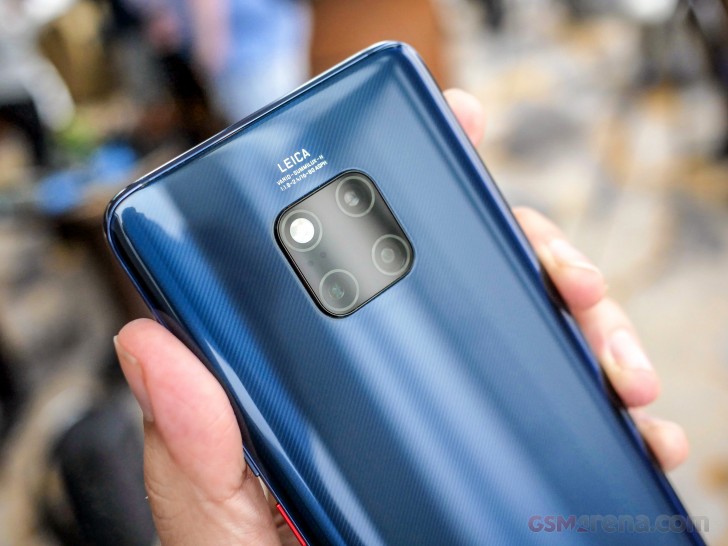
Speaking about the back, the new, and heavy teased, camera square setup is the first thing you'll notice. Huawei has made quite a few attempts to make those Leica camera setups standout, but this one is probably the most successful one since its first dual-cam on the P9.
The triple camera, obviously, occupies three of the corners, while the fourth one is for the dual-LED flash.The tri-camera on the Mate 20 is actually slightly less impressive compared to the Pro model, but still a major step forward over the Mate 10. It has a 12MP main sensor behind f/1.8 lens, an 8MP cam with f/2.2 telephoto lens, and a new 16MP snapper with f/2.2 17mm wide-angle lens. The monochrome shooter is now gone, and this marks an end of an era.
While black-and-white photos from monochrome sensors are better than those coming from regulars ones and are then desaturated, the gains are rather small to justify the existence of a dedicated camera. Particularly now, that the more sensitive monochrome sensor is no longer used to boost the low-light shooting capabilities, we are certain that the ultra-wide will be way more useful.
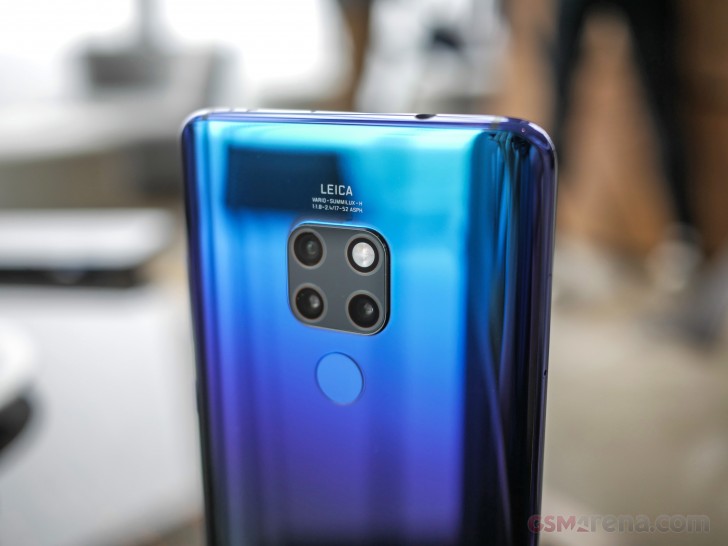
The Pro model is the one boasting the 80mm lens on its 8MP OIS snapper - it's the same we first experience on the P20 Pro, which is 3x optical zoom compared to the regular lens and when you factor in the ultra wide one the it means the Mate 20 Pro offers 5x optical zoom range. The Mate 20 only gets 3x optical zoom with its 17mm and 52mm lenses and there is no OIS at all. Still impressive, if slightly disappointing when you've seen the alternative.
The good news is Huawei's EIS stabilization is here to stay, and it should be at least as good as on the P20. The Night Mode from the P20 phones is another goody available on both Mates, so the Mate 20 isn't losing those cool long-exposure handheld photos.
Just like the Mate 10, the Mate 20 is keeping the 3.5mm audio jack, which will be appreciated by those who haven't switched to wireless headphones yet. Unfortunately it's also keeping its sub-par IP53 rating for dust and light splashes.
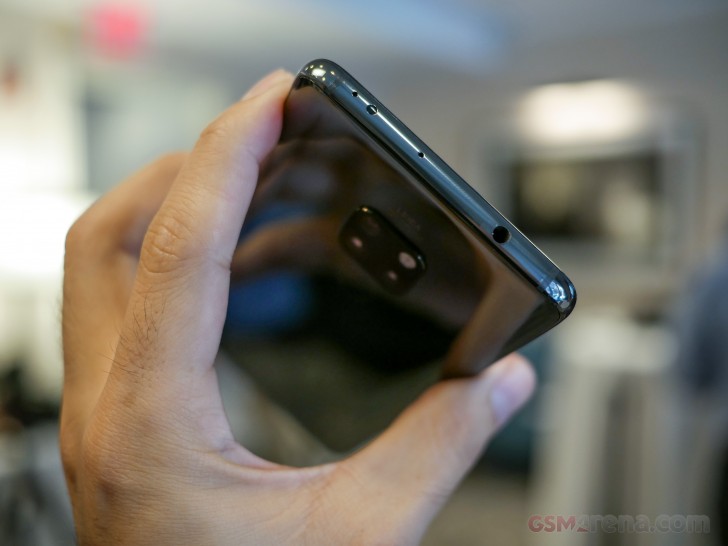
Huawei Mate 20 lacks stereo speakers - it has just one and it's bottom-firing, behind a dotted grille. The hybrid SIM slot is also at the bottom, and it can house two nano-SIMs, or one nanoSIM and one nano memory card. Yes, you read that right. Huawei has created a new memory card standard and the Mate 20 phones are the first to supported. Toshiba will be the first OEM to release such cards.
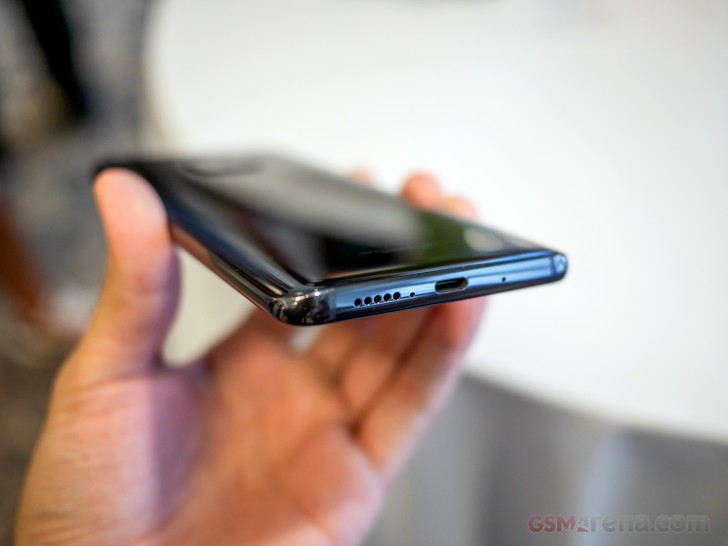
This is quite odd. Nobody really needed a new memory card standard, especially one that can't go beyond 256GB as per Huawei's specs. If the maker decided to come up with cards to solve the hybrid slot dilemma, okay that might have been a somewhat good point. But it didn't solve anything as the slot is still a hybrid one. The top tray reads SIMs, the bottom can accept one of those new NM cards or a nanoSIM.
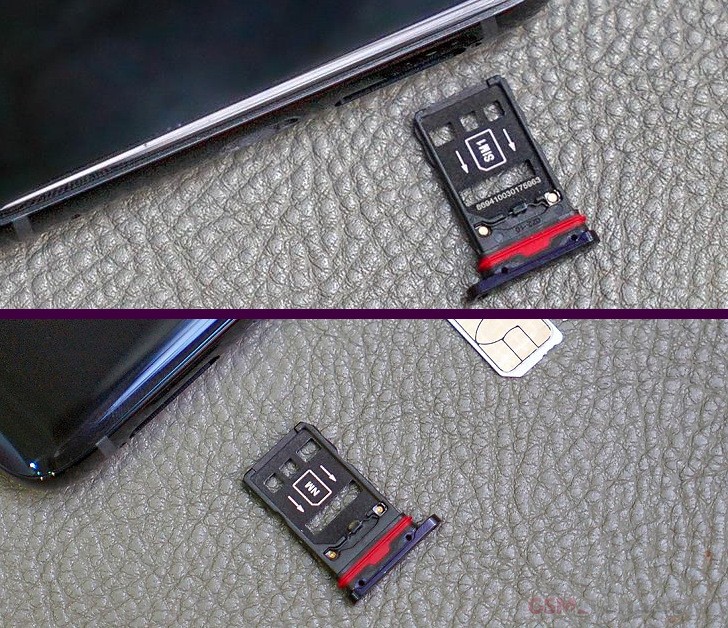
The worst thing is that none of your SD cards would work with the Mate 20, so you must buy new ones, which can't be easy or cheap given that only one company will make them. And then buy a new card reader - if anyone decides to make one, that is.
So, if you ask us, consider the Mate 20 as with non-expandable storage, at least at time of launch.
Huawei Mate 20 has a large 4,000 mAh battery underneath the rear glass. It supports the company's proprietary 22.5W SuperCharge, but strangely enough no wireless charging.
The rear glass is slightly curved as before, and you can get it in some cool new color-shifting hues.
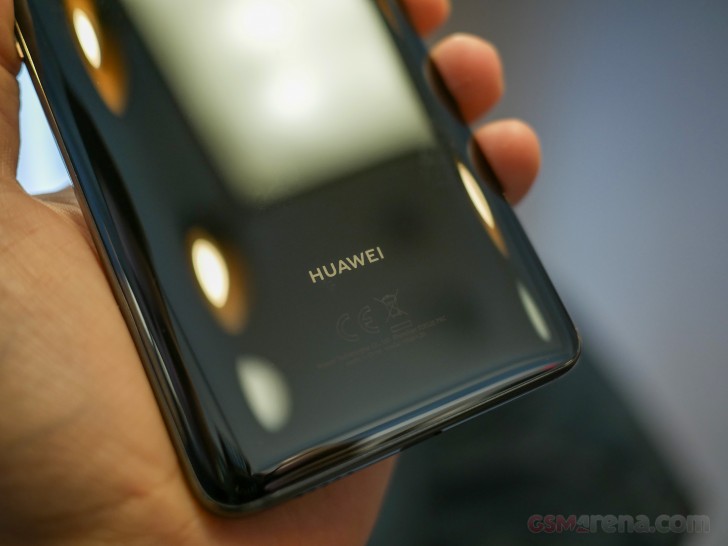
The Mate 20 is as big as the Mate 10, as we established, because it's cut some bezels. Neither the metal frame, nor the two glass pieces help the overall grip and the Mate 20 is as slippery as it looks, which is worrisome for such a big device. Then again, Huawei is providing you with a transparent and grippy silicone case in the retail box, so it got you covered out of the box.
This year it feels like Huawei has done more to differentiate the Mate 20 and Mate 20 Pro than it did with their predecessors. The non-Pro version is about 35% cheaper and it does miss on more cool features.
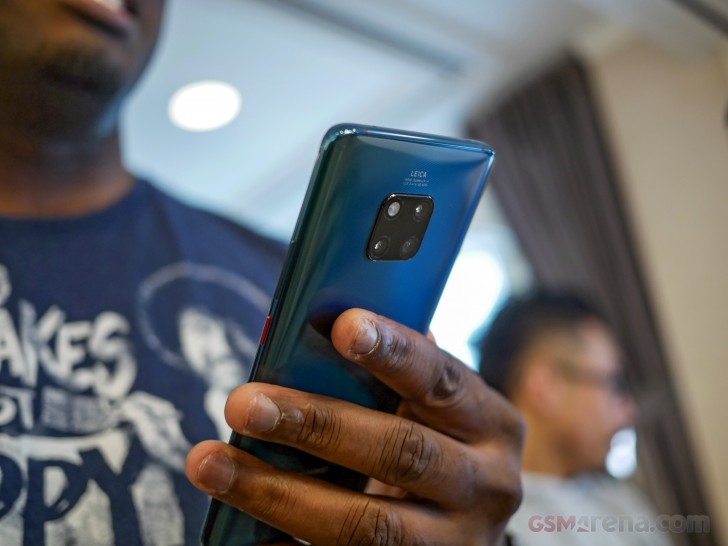
You are getting an entirely different trio of cameras, a FullHD LCD instead of a QHD OLED screen, and missing on the super rapid 40W wired and 15W wireless charging, the water resistance and slightly bigger battery. There's no advanced FaceID either and you get a conventional rear-mounted fingerprint sensor instead of a fancy under-display one. Even so, the Mate 20 feels like a massive upgrade over the Mate 10 and we don't see any reasons for disappointment.
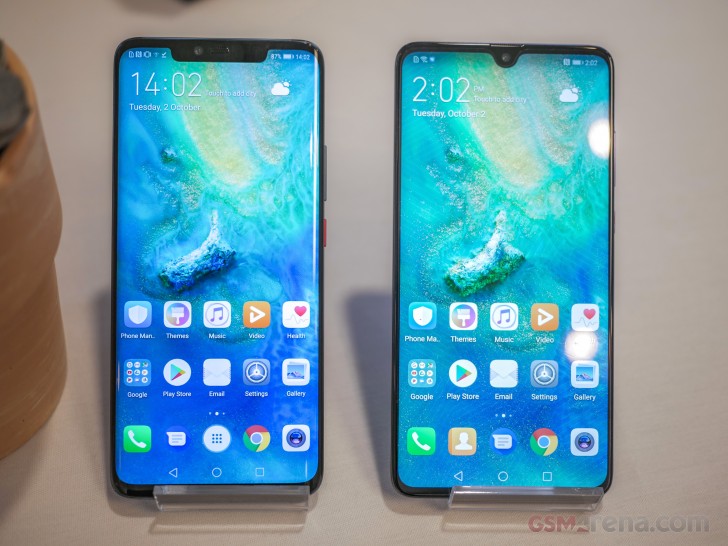 Mate 20 Pro and Mate 20
Plus, the non-Pro Huawei Mate 20 got a memory boost to 128GB/6GB and it still brings the 7nm Kirin 980. It looks fresh and it has a bigger screen than the Pro - the shorter aspect means difference in surface is actually bigger than the 0.14" difference in diagonal suggests. And the waterdrop notch is not only much less of an eye-sore, but it also means much more of the screen is actually available for your content.
All this makes the Mate 20 the safe upgrade option - bringing plenty of novelties compared to the past generation, while maintaining a reasonable price in a market where 4-figure tags are no longer considered outrageous.
Huawei Mate 20 Pro hands-on
The Huawei Mate 20 Pro aims to do what the P20 Pro did last spring - bring all the best bits from Huawei's labs in one device. It has an under-display fingerprint reader, advanced facial recognition tech, 40W super fast charging and a triple camera setup unlike anything else on the market.
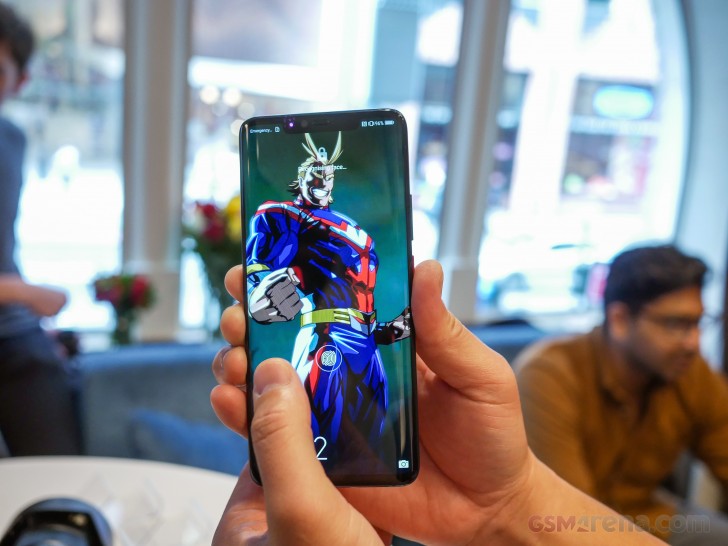
The Mate 20 Pro employs a 6.39" AMOLED screen curved towards its long sides, in Samsung Galaxy style. It's of a higher 1440p resolution and has an amazing pixel density of 539ppi. There is HDR support, of course, and everything we saw on it looked gorgeous.
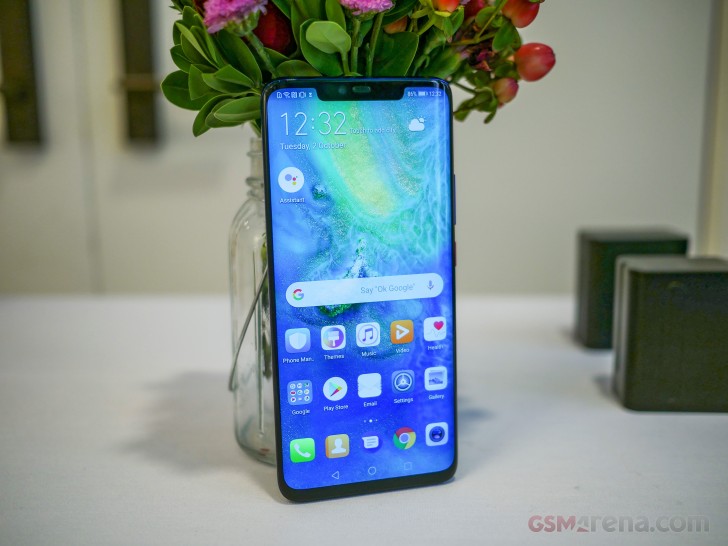
The high-res curved OLED hosts an iPhone-like large notch - in fact it's the biggest cutout in the Huawei portfolio. It houses the earpiece, the 24MP selfie snapper, and the infrared dot projector and camera for advanced 3D facial recognition.
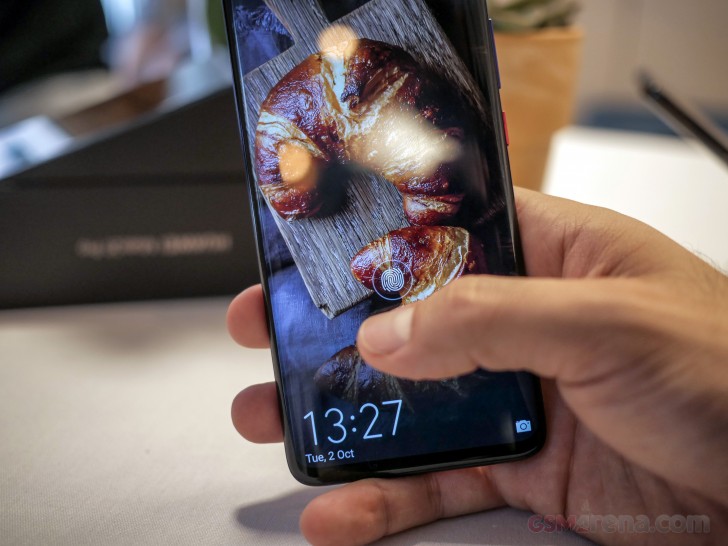
Best thing is that unlike Apple, Huawei didn't just deliver the face unlock and proceed to call it quits. The fingerprint scanner is still here - residing under the display. It's Huawei second generation in-display sensor, actually, but you'd be forgiven for not remembering the Mate RS Porsche Design. The company claims the Mate 20 Pro's Dynamic Pressure Sensor is 30% quicker than the old one. In our short experience we found it quick and reliable although the fact that it requires a bit more pressure on the glass that what we are used to do was somewhat odd. It seems like something we can adjust to quickly, but we'll only know for sure once we get to spend more time with the phone and do a full review.
The Huawei Mate 20 Pro's square camera setup over at the back looks slightly different than the regular Mate 20 as the flash occupies the top left rather than the top right corner. The bigger change however are the cameras themselves - none of the three match the ones on the non-Pro Mate 20.
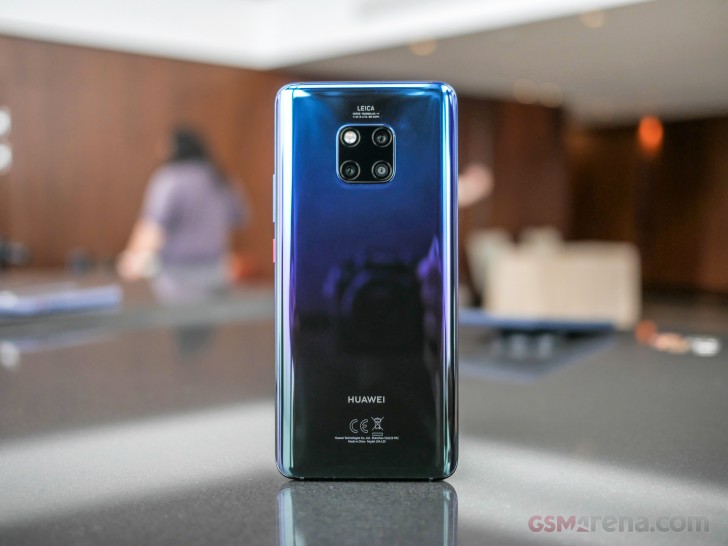
The main camera on the Pro model has a 40MP 1/1.7" sensor behind f/1.8 lens - the same module as on the P20 Pro. It employs a special quad-bayer filter, meaning that you are actually getting 10MP images from it and shooting at its native 40MP resolution is rather pointless.
The 8MP telephoto snapper with 80mm f/2.4 optically-stabilized lens is also coming from the P20 Pro. The new addition is a 20MP cam with 16mm f/2.2 wide-angle lens that replaces the monochrome shooter.
There is no fingerprint scanner on the back and, which along with the LED flash position, lets you tell the Mate 20 from the Pro if both are lying on their screens.
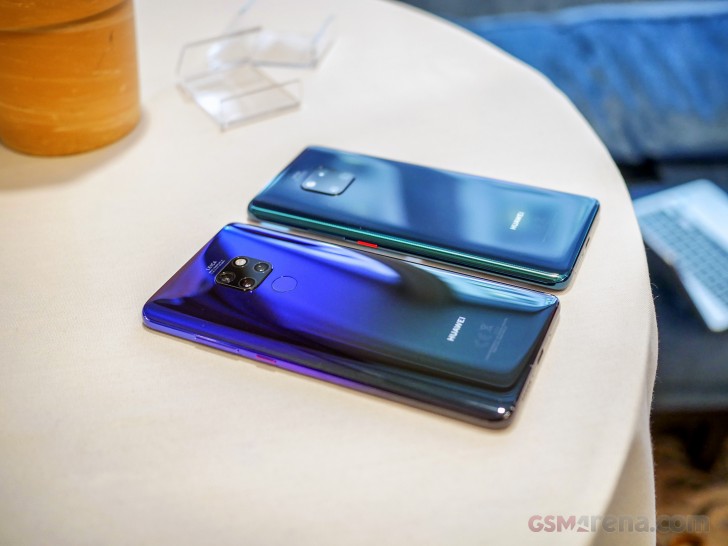
The Mate 20 Pro lacks an audio jack, but is IP68-rated for dust and water resistance. The protection is a step above the IP67 of the Mate 10 Pro from last Fall and this time around the Pro has also gained expandable storage to match the non-Pro model.
Unfortunately, just like the Mate 20, the Mate 20 Pro hybrid slot supports only the new nano cards.
In other not so great news the Huawei Mate 20 Pro boasts stereo speakers. Which is great on its own, but the bottom one is embedded in the USB-C port as there is no grille down there. While the port itself would act as a chamber and thus boost the sound, we are pretty sure we will deafen it once we plug a charger in. Talk about hybrid things.
Underneath that beautiful OLED screen lies a beefy 4,200 mAh battery which now supports Huawei's latest 40W SuperCharge solution. The maker promises it should refill 70% of a dead battery in about half an hour - the only other phone to offer that kind of speed is the Oppo Find X Lamborghini Edition with its 50W charger, but that's rather hard to find.
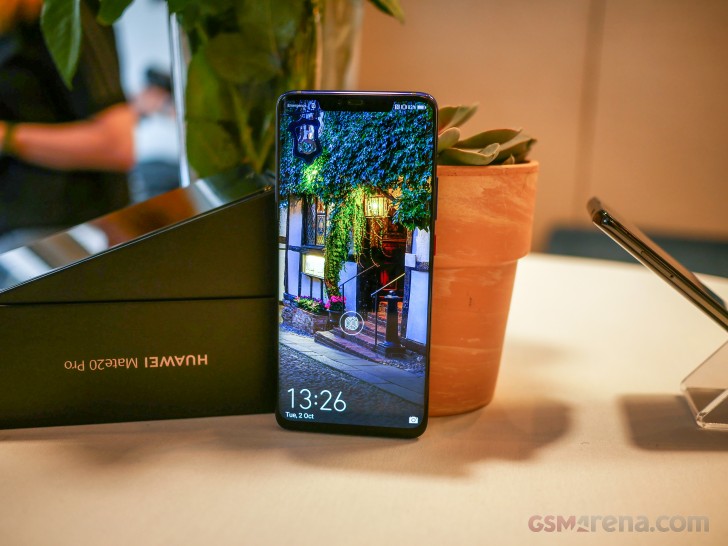
In other cool charging related news, the Mate 20 Pro supports 15W wireless charging, and it can even wirelessly charge other devices. We'd imagine the best case scenario to use this is to lend power to your smartwatch that's running out of power . After all wireless charging is hardly very power-efficient so charging another phone would be too wasteful.
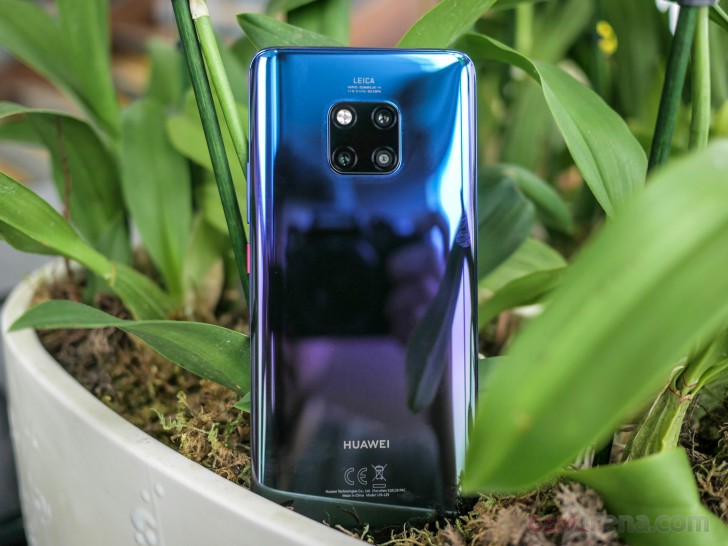
You've probably noticed the new colors on the pictured Mate 20 Pro here. Huawei calls those hyper optical and they will make it to the regular Mate 20, too. The glass has this vinyl-like texture, which is a great grip booster and we liked it a lot. Handling the hyper-optical Mate 20 Pro is a very unique experience with a pinch of retro vibe.
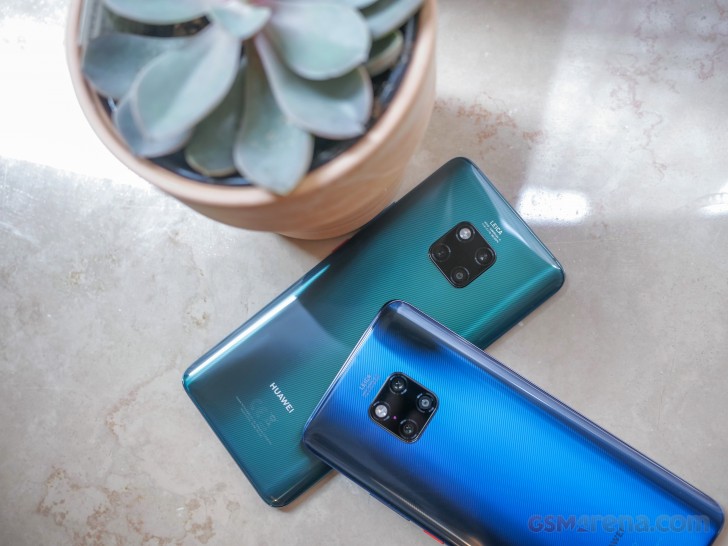
The blue and green colors beneath the texture are uniform, unlike the gradient paintjobs on the glossy models (minus the non-Pro's mirror black finish). But the grippy surface is more fingerprint resistant and you can tell it immediately. Smudges are less likely to stick and the whole thing is easier to clean.
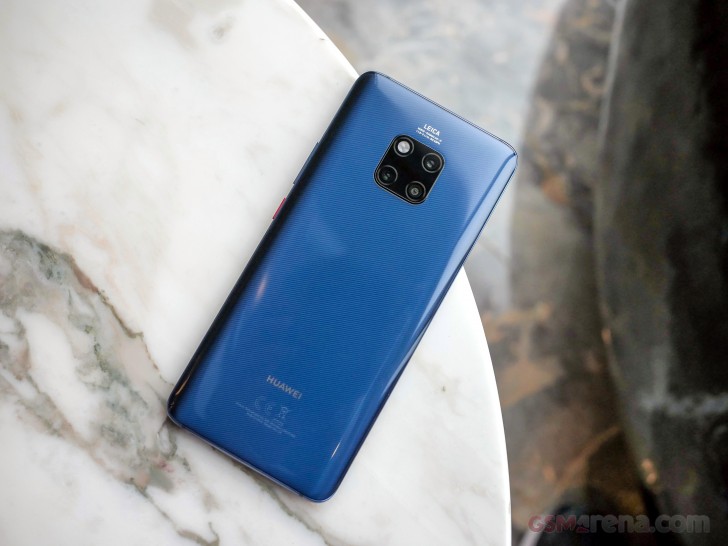
Huawei Mate 20 Pro is shaping to be not only Huawei's ultimate smartphone, but one of the most powerful phones in the market as the holiday season approaches.
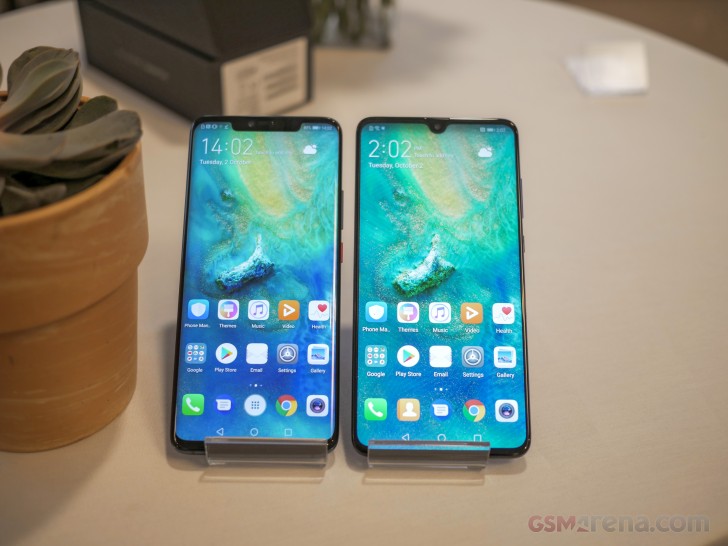 Mate 20 Pro and Mate 20
The one thing the Mate 20 Pro has lost to the Mate 20 is the tiny notch, but we can't have both a small notch and a 3D face scanning, not this year at least. But the Pro makes up for that with a trendily curved screen, which makes the phone look and feel smaller than it actually is.
Huawei Mate 20 X hands-on
Huawei had not one but two surprises after the Mate 20 and Mate 20 Pro announcements. The first one was the Mate 20 X 7.2" phablet, which is mainly targeted at gamers, but has a lot more going for it. It's part Mate 20 (1080p resolution, rear-mounted fingerprint scanner, 22.5W charging), part Mate 20 Pro (OLED panel, the more advanced camera setup, stereo speakers) and part its own thing (the huge diagonal, an equally impressive battery and M Pen stylus support).
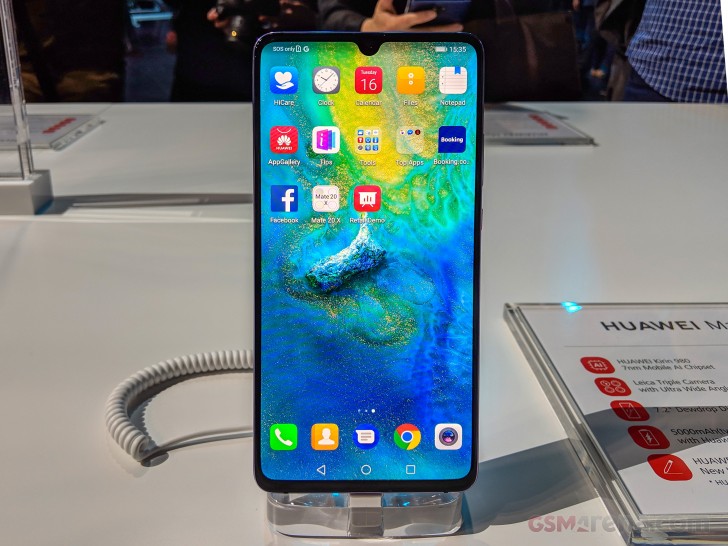
The Mate 20 X has a large 7.2" OLED screen of 1080p resolution and a very small waterdrop notch. It looks a lot like the regular Mate 20, but you can tell right away the screen is of the OLED kind. The pixel density drops down to 346ppi but that's still plenty sharp.
The Mate 20 X has the same dual-glass design as the other two, but its dust and water protection is the lesser IP53. And even though it has a glass back, there is no wireless charging available.
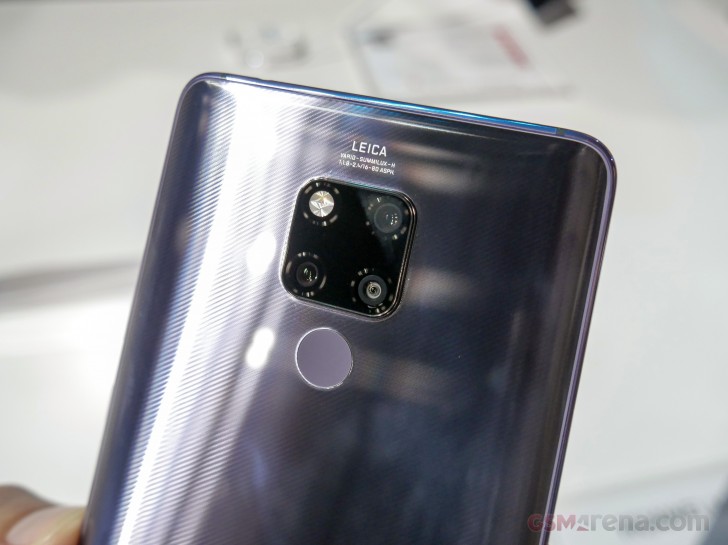
The Mate 20 X has lifts the tri-camera from the Pro model - 40MP regular, 20MP wide, and 8MP OIS telephoto. The square setup is here to stay, of course, as it's the signature shape for this Mate generation.
The smaller notch has the 24MP selfie shooter at the front - that along with the Kirin 980 chipset is shared by all Mate 20's that debuted today.
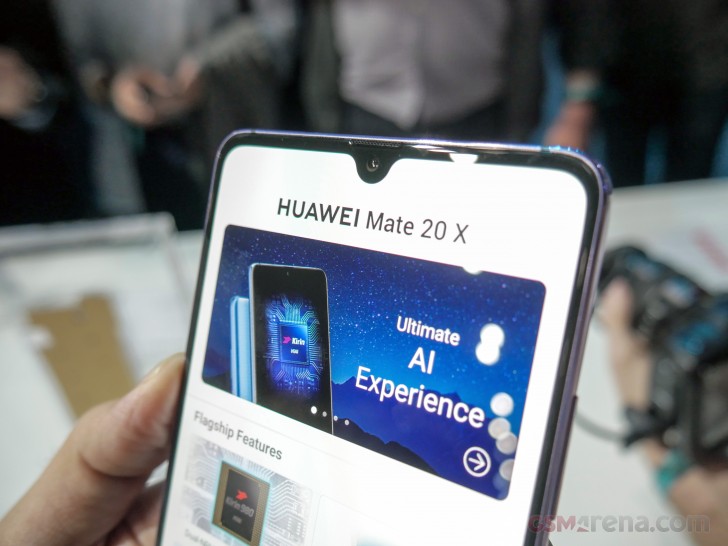
The Mate 20 X has audio jack on its top, and there are two grilles for the new Dolby Atmos-powered speakers - at the top and the bottom. Yes, the bottom speaker isn't embedded in the USB port here and we sure like it better this way.
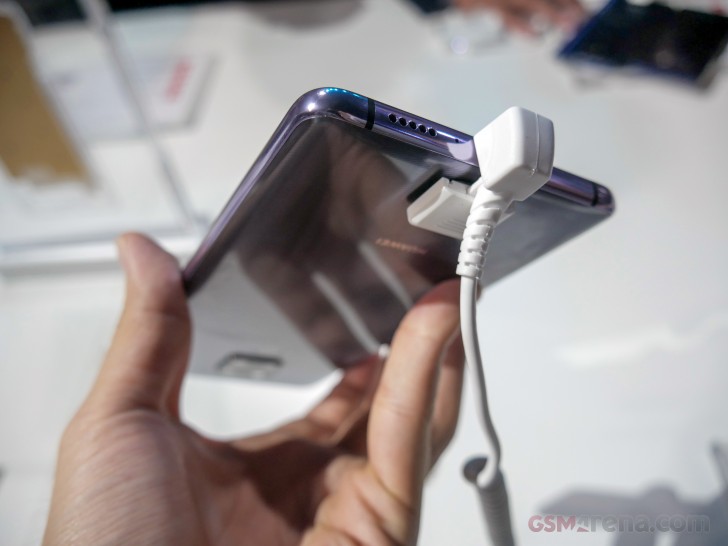
Then the hybrid SIM slot with the new NM memory card is available on the Mate 20 X, too. Huawei is dead serious with the new standard and will try to push it aggressively for sure.
The Mate 20 X runs on the Kirin 980 chip, comes with EMUI 9 and GPU Turbo 2.0. The phone features Huawei Supercool - the company's name for a vapor chamber cooling with a graphene film heat spreader. It sure sounds interesting, but before we do some proper testing we can't be sure whether it's actually useful or just a marketing gimmick.
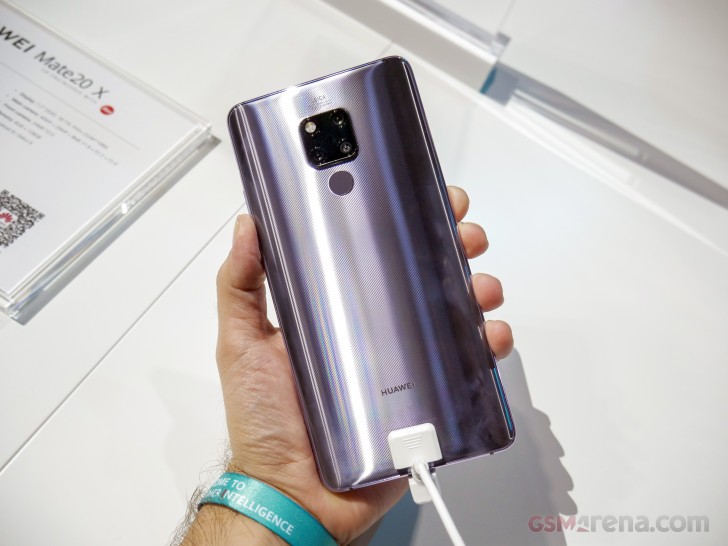
So, as we said the phone is gaming-oriented - it has the chipset and the cooling tech, as well as the high-end speakers. But there is more - the Mate 20 X is powered by a beefy 5,000 mAh battery with support for Huawei's SuperCharge at 22.5W. The faster 40W would have been especially useful here, considering the large battery, but we mustn't forget that the 20 X is cheaper than both the Pro and the Porsche Design Mate 20 RS.
There is one more thing about the Mate 20 X, which we couldn't test. The Mate 20 X has a pressure-sensitive screen, which can sense up to 4,096 levels of pressure. The so-called M-Pen is sold separately, unfortunately and there's no slot on the phone for it. But if you do opt to get it, Huawei has modified a bunch of its system apps to add support for it.
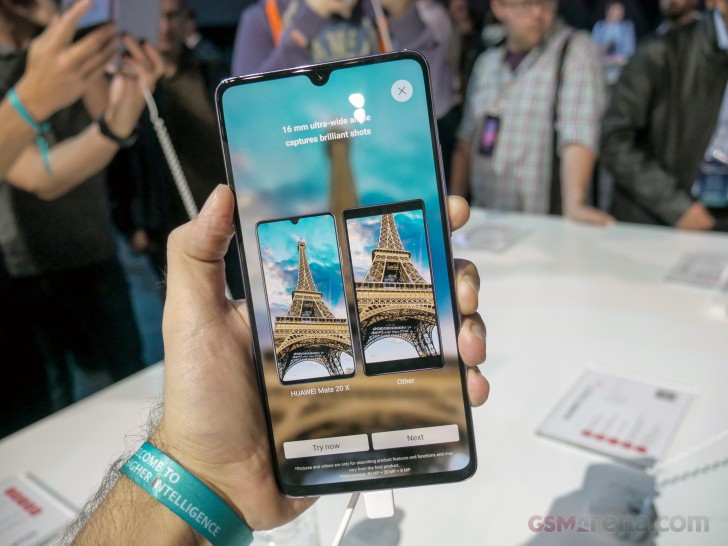
The phone is big, yes, and will barely fit in pockets. And it's unlikely to even be released in most Western markets, but we can still see many people choosing this one over the other Mates. It's priced at €899 so you are saving some compared to the Pro, yet it has its camera, the screen is OLED, and that battery backup is impressive.
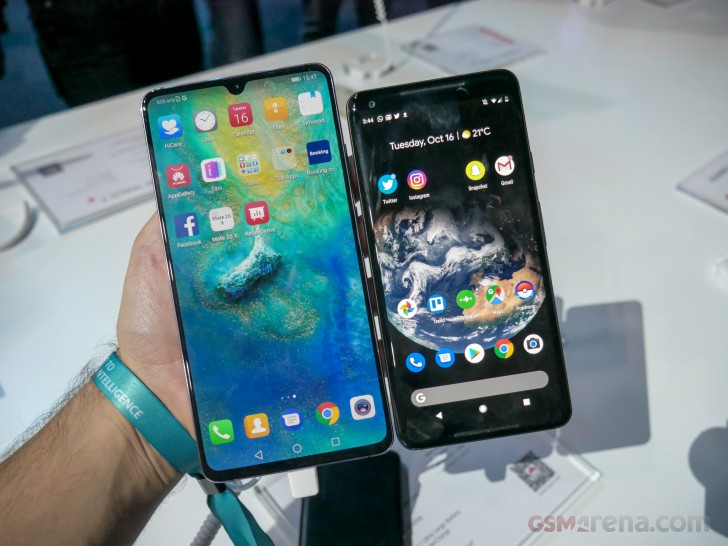 Mate 20 X and Pixel 2 XL
The phone didn't feel that heavy in hand and is rather thin, so it's handling is reasonable considering the humongous screen.
Huawei Mate 20 RS Porsche Design
There can't be a major Huawei launch without a high-end Porsche Design edition, can it? The new Mate 20 RS Porsche Design is essentially a swankier version of the Mate 20 Pro.
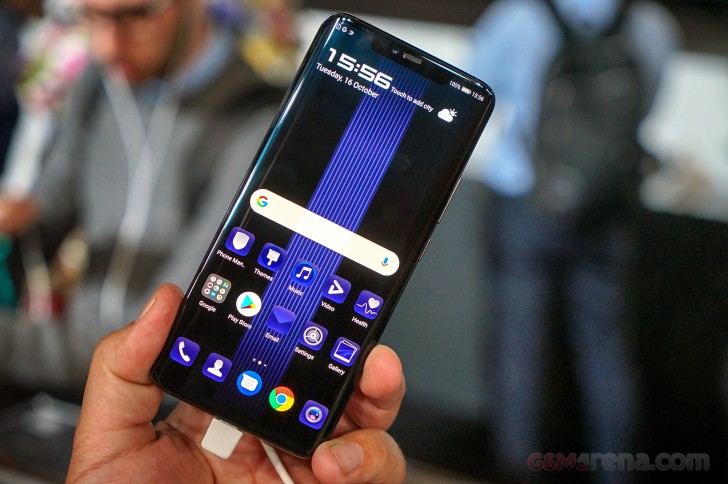
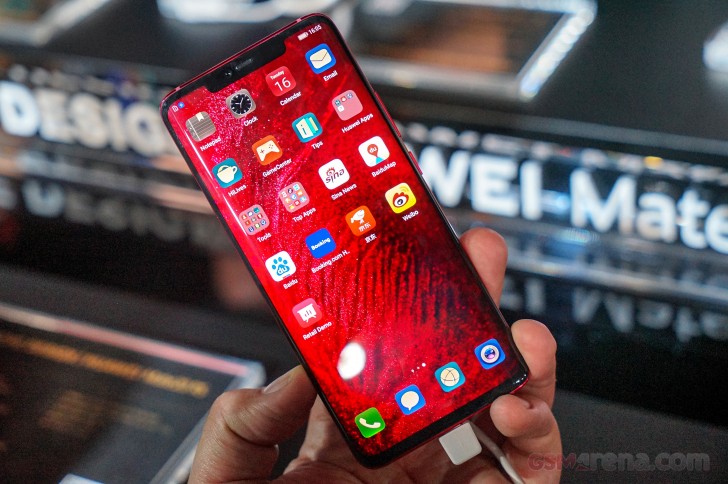
The Mate 20 RS has the same screen, chipset, camera as well as battery capacity and charging capabilities as the Mate 20 Pro. It has more RAM and storage, though - 8GB and 256GB/512GB respectively.
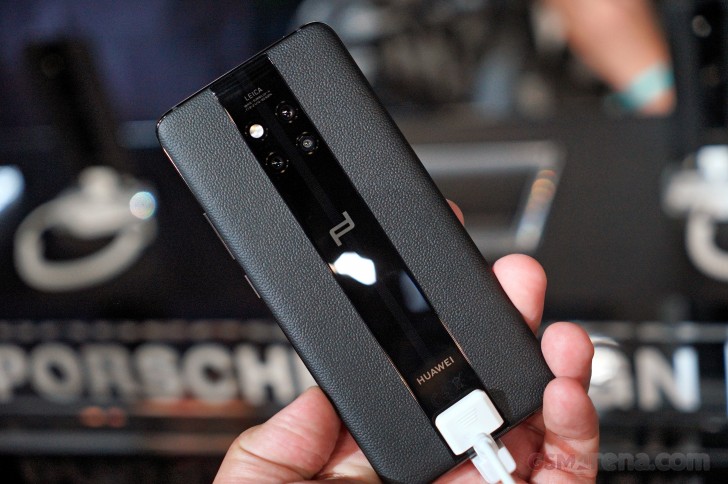
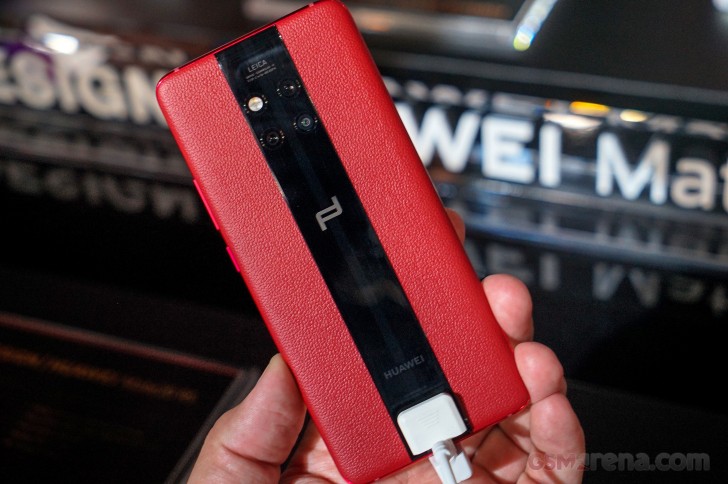
The back is clad in leather with a vertical strip of glass holding the Leica triple camera, it's almost like a racing stripe. The leather is black, but China will get a very limited Red edition.
This is handcrafted leather we're talking about here, but for €1,700 or €2,100 depending on the version we would expect nothing less.
Kirin 980 premieres on the Mate 20 series
Huawei Mate 20 and Mate 20 Pro are the first smartphones to utilize HiSicon's latest Kirin 980 chip. That the first chipset in an Android phone built on the 7nm manufacturing process promising plenty of power and efficiency gains over its predecessor and other 10nm chipsets.
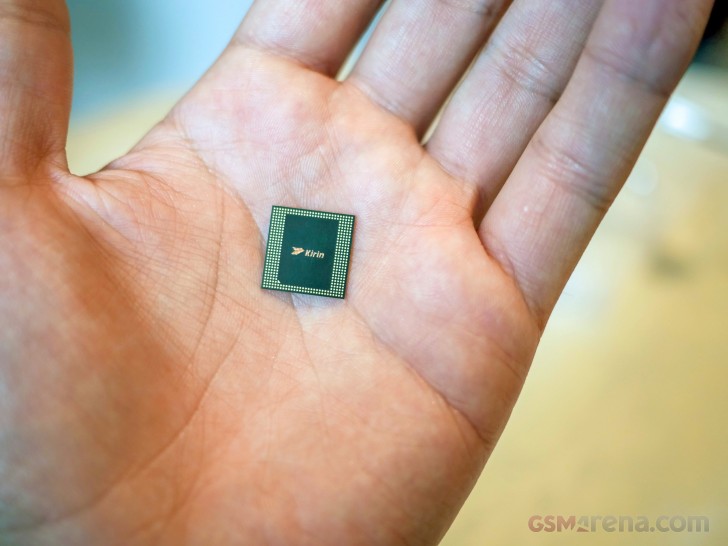
The Kirin 980 uses an 8-core CPU design with 2x high-performance Cortex-A76 cores running at 2.6GHz and 2x Cortex-A76 cores clocked at 1.92GHz and 4x power-efficient Cortex-A55 cores that go up to 1.8GHz. The processor makes use of ARM's DynamIQ architecture, which is the evolution of big.LITTLE and allows any subset of cores (or all together) to work simultaneously depending on the workload.
Kirin 980 SoC uses a Mali-G76 MP10 (ten-core) GPU which was announced back in May 2018 offering tremendous performance and efficiency gains compared to its predecessor Mali-G72 in the Kirin 970. According to the press release, the GPU outperforms the previous generation by 46% and improves the power efficiency nearly twice. It can also take advantage of the new clock-boosting technology that recognizes when a demanding game is running and provides optimal gaming performance.
EMUI 9 supports GPU Turbo 2.0, which is supported by six games so far. It allows all of those games to run smoothly and steady at 60 fps at full resolution. GPU Turbo 2.0 is new, but Huawei is also working with game developers to enable it in even more popular games.
Huawei points out that the Kirin 980 outperforms the 10nm chips by 20% and it's 40% more efficient at the same time.
The 7nm manufacturing process isn't its only claim to fame. The chipset is also the first to support 2133MHz LPDDR4X memory and incorporates a dedicated dual NPU chip. Huawei calls the latter "Dual-Brain Power" and can help recognize up to 4,500 images per minute, which is around 120% faster than last year's single NPU chip on the Kirin 970 SoC.
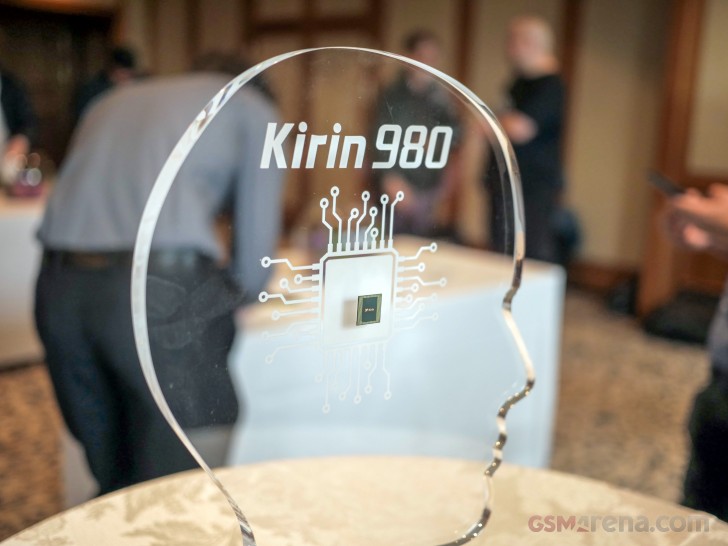
Other notable features include 6.9 billion transistors crammed inside a 1cm² die (1.6 times more than its predecessor), 1.4Gbps Cat 21 LTE modem and blazing fast WiFi speeds of up to 1,732Mbps peak download/upload speeds.
Finally, the chipset comes with a new Image Signal Processor, which delivers a 46% increase in data throughput and better multi-camera support. It promises an improved HDR color reproduction, Multi-pass noise reduction that removes artifacts without hurting with the image details and better motion tracking.
Now off to some number-crunching. We start off with the GeekBench CPU test and the Mate 20 Pro easily comes on top of the pile, when it comes to multi-core performance. Its single core result came just short of the Mongoose cores of the Galaxy Note9.
GeekBench 4.1 (multi-core)
Higher is better
GeekBench 4.1 (single-core)
Higher is better
The compound AnTuTu brought more reasons for Huawei to smile as its top dog once again came best of the bunch.
AnTuTu 7
Higher is better
The graphics performance was a tad less impressive. In terms of sheer power the Mate 20 Pro got a first, a second and a third places in the three tests despite facing the most elite of Android competition. However, it's taller screen and higher resolution meant it wasn't doing as hot in the onscreen tests.
Still, the GPUs of Kirin chipsets were miles behind the competition for years, so the fact that the Mate 20 Pro can now trade blows with the best out there is a win in itself.
GFX 3.0 Manhattan (1080p offscreen)
Higher is better
GFX 3.0 Manhattan (onscreen)
Higher is better
GFX 3.1 Manhattan (1080p offscreen)
Higher is better
GFX 3.1 Manhattan (onscreen)
Higher is better
GFX 3.1 Car scene (1080p offscreen)
Higher is better
GFX 3.1 Car scene (onscreen)
Higher is better
EMUI 9
The Mate 20 duo will ship with Android Pie out of the box and it will feature EMUI 9.0. Huawei has cleaned up the general interface and the settings panel has been simplified by hiding rarely used settings under advanced in more categories. Huawei's built-in apps are also seeing updated navigation menus along the bottom of the screen to make them easier to reach.
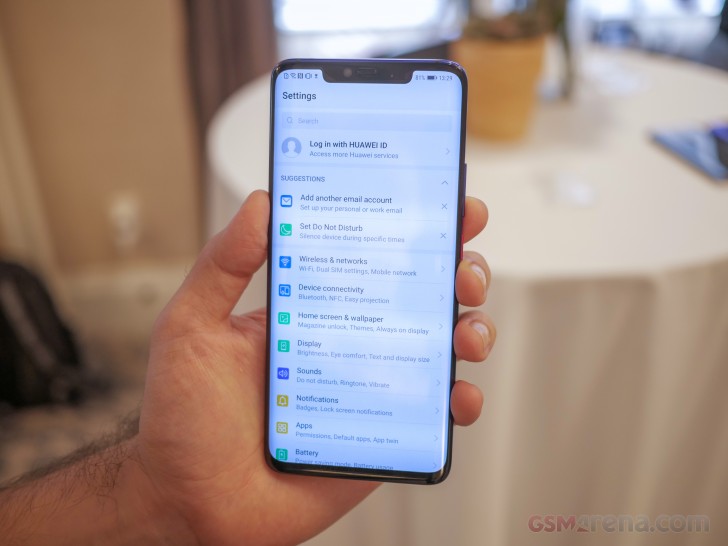
The EMUI 9.0 brings GPU Turbo 2.0, quicker app starts and Password vault. The Mate 20 Pro supports app locking with face authorization.
Huawei Share can now do two more things wirelessly: share files with a PC and print documents. There is also a travel assistant by HiVision and in-house developed Digital balance app that tell you how much time you are spending on your phone and give you the option to limit yourself (the screen will go monochrome after the time is up).
Triple Cameras done right
Both Huawei Mate 20 and Mate 20 Pro pack a triple-camera setup with dual-LED flash on their backs. Those four things are packed together into a square, which if the teasers are anything to go by, should become the Mate 20 series' signature shape.
The Mate 20 cameras waves goodbye to the monochrome sensors. Those were very helpful for boosting low-light performance before chipsets could do multi-frame image stacking for noise reduction, but now all they bring is slightly better artsy black and white shots and we can agree Huawei did the right thing by removing them. The setups are still Leica-branded, coming with the exclusive color filters if those happen to be your thing.
The B&W cameras have been replaced with ultra-wide-angle snappers - a 17mm 16MP for the Mate 20 and a 16mm 20MP for the Mate 20 Pro. Both sensors sit behind f/2.2 lenses.
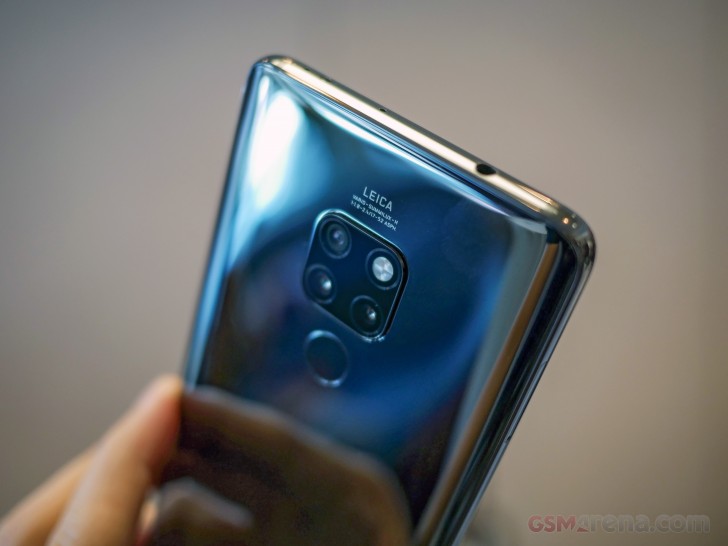
Huawei Mate 20 has a primary 12MP shooter with f/1.8 lens and a secondary 8MP snapper with 52mm f/2.4 lens for telephoto purposes. Both of those lack optical stabilization.
Huawei Mate 20 Pro is equipped with the 40MP camera we saw first on the P20 Pro with f/1.8 lens. It spits 10MP photos as the Quad-bayer filter essentially means that's its native resolution, but if you feel like it - you can still opt to save the 40MP image. There is also an 8MP snapper with 80mm f/2.4 long-range lens and optical stabilization - once again lifted from the P20 Pro.
Both Mates feature a 24MP f/2.0 camera for selfies at the front and it can do blurred backgrounds. We've seen this unit already on the P20 phones, but sadly its performance wasn't nearly as spectacular as the high pixel count might suggest.
While the Huawei Mate 20 cameras cover just over 3x optical zoom (17-52mm in 35mm equvalent), the Mate 20 Pro goes 5x between its wide telephoto lenses (16-80mm in 35mm terms). The Night Mode is available on both phones and you will be able to take long-exposure-like shots without a tripod.
As an added bonus to the wide-angle cameras, Huawei says everyone will be able to shoot some impressive macro shots as it can focus from as close as 2.5cm.
The camera app is enhanced by Huawei's AI, of course. There is Master AI 2.0, which can now recognize and tune settings for up to 1,500 different scenes. And we hope Huawei has made it less aggressive on the trees and skies, as the Greenery and Blue Sky modes in the end made Huawei release a new firmware for the P20, where the Master AI is switched off by default.
There is also a new AI Cinema mode, which records in 21:9 aspect and uses a Classic Movie color (filter) boosted by the AI itself.
And here come a bunch of camera samples from the Mate 20 Pro, so you see the triple setup in action. The light wasn't the best, but the images still came out rather good, impressing with their dynamic range and detail levels. We've even included the hybrid zoom samples (135mm in 35mm equivalent) to show you how those stuck up even if these are hardly the best conditions to rely on digital zoom.



Huawei Mate 20 Pro: 16mm • 80mm • 135mm




Huawei Mate 20 Pro: 16mm • 27mm • 80mm • 135mm




Huawei Mate 20 Pro: 16mm • 27mm • 80mm • 135mm
We did an impromptu shootout putting the Mate 20 Pro against the Pixel 3, which has a strong claim to the title of best camera of 2018. The Huawei flagship can offer far more in terms of versatility with its ultra wide and telephoto snappers, but even if we look at just the primary snappers it can stand its ground just fine.




Huawei Mate 20 Pro • Google Pixel 3 • Huawei Mate 20 Pro • Google Pixel 3
We also did a low-light shot and the result from the Mate 20 Pro came out quite impressive - see for yourselves.


Huawei Mate 20 Pro • Google Pixel 3
Sadly the selfie samples were once again a big disappointment as the fixed focus snapper is configured so you need to shoot at less than an arm's length to get any sort of decent results.


Huawei Mate 20 Pro • Google Pixel 3
Huawei Watch GT hands-on
Alongside the two phones, Huawei announced a new Huawei Watch GT. It's actually not a Wear OS device, using Huawei's proprietary latform instead and runs on Huawei's own dual-chip solution. It switches between a low and high-power chip, to get excellent battery life without sacrificing performance.
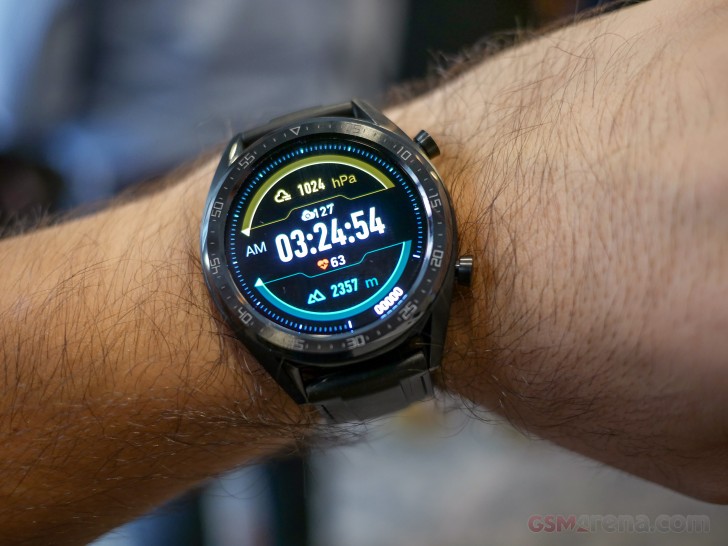
The non-smart platform combined with the dual-chip smart switching, should deliver outstanding battery life. In fact, Huawei says the Watch GT can last two weeks with Heart rate monitoring and exercise tracking for 90 minutes per week. Or, a month with GPS and heart-rate off - if you use it as a watch and for notifications only.
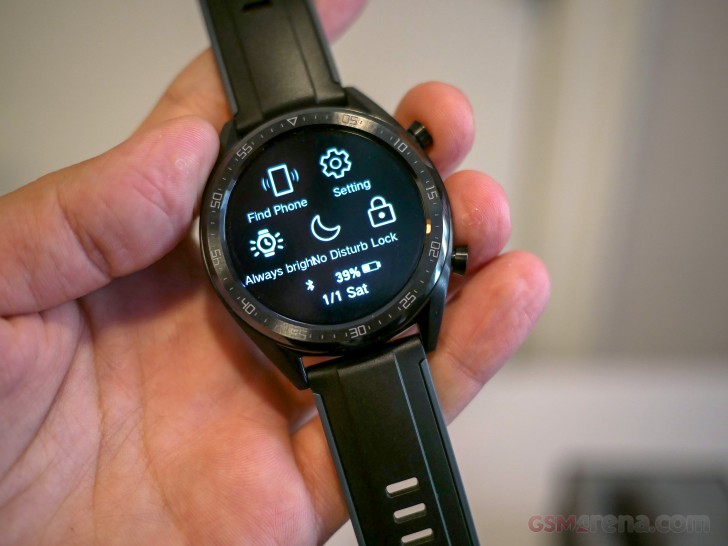
The heart-rate monitor is boosted by Huawei Truseen 3.0 HRM technology. The sensor uses 6 LEDs and is more efficient and accurate with self-learning.
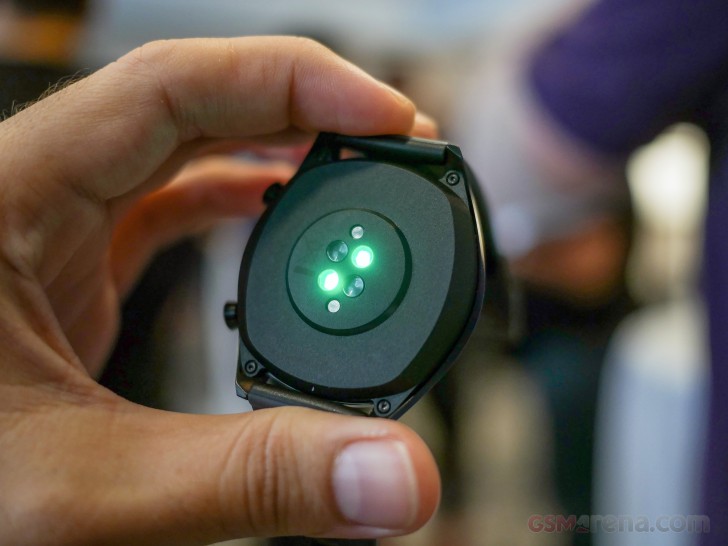
Other key features are GPS, sleep and activity tracking, and an altimeter. With a proprietary platform like that you should not count on getting your favorite wearable apps, though, if you happen to have those.
Wrap-up
Huawei's event is over, but the Mate 20 duo's journey is only now starting. And if our first impressions are anything to go by, it might be a path to glory.
The triple-camera made a big splash earlier this year, but even then, we could feel that the monochrome camera wasn't contributing enough to warrant its presence and we are so glad Huawei made the necessary changes to remain at the forefront of smartphone photography.
Huawei has also improved the distribution of the features between the two core Mate 20 phones with the Pro version now only missing on the 3.5mm audio jack and some screen space compared to the regular one. That's still not ideal as there's no way for you to get the full package, but it's not as bad as it was last year.
And anyways - it's not like either of the Mate 20 phones feels like a compromise. Rather they both seem like proper flagship that we can't wait to put through their paces.


0 Comments